


How Does RBI’s CBDC Digital Rupee Work

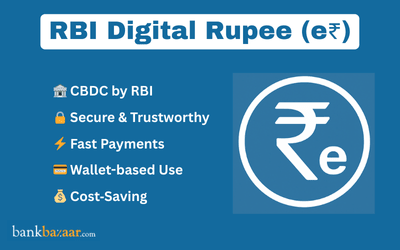
The Reserve Bank of India has officially launched the Central Bank Digital Currency (CBDC). The CBDC Digital Rupee (e₹) is designated as a legitimate form of digital legal tender. This currency will be recognized for facilitating transactions in parity with conventional physical currencies. It functions as a sovereign, digital form of physical cash offering a spectrum of benefits. It enhances transaction speed, cost-effective global transfers, and ensures a secure method of preserving value.
The elimination of physical production requirements, access to digital transactions, and efficiency in government payment distribution are other practical benefits. CBDC aims to introduce an additional avenue for currency utilization. The primary differentiation stems from its digital nature, enabling seamless electronic transactions and bolstering user convenience. Through our page, you can understand the types, working, features, advantages and disadvantages of the CBDC Digital Rupee (e₹).
What is a Digital Rupee?
Digital Rupee is the digital version of the Indian currency. Unlike physical cash or coins, it doesn't have a tangible presence. Instead, it's stored and transacted digitally. This type of currency has become increasingly important in modern financial systems, where electronic transactions have become the norm. Digital currencies encompass a range of electronic forms of money that are shaping the future of financial transactions and payments. Cryptocurrencies, CBDCs, and stablecoins each represent distinct approaches to providing digital alternatives to traditional physical currencies, each with their own characteristics and implications for the financial landscape. While all cryptocurrencies like Bitcoin, Ethereum, and Litecoin will face taxation, the RBI's digital rupee remains exempt from such regulations.
There are three major categories of digital currency:
- Cryptocurrency: Cryptocurrencies like Bitcoin, Ethereum, Altcoins and others are decentralized digital currencies that utilize cryptographic techniques for secure transactions. They do not rely on any central authority for verifying transactions. Cryptocurrencies rely on blockchain technology, which is a decentralized and distributed digital ledger. It records all transactions in a secure and transparent manner across a network of computers. Each transaction is grouped into a ‘block’ and added to the chain of previous transactions. This technology ensures the integrity of the transaction history and prevents tampering.
- Central Bank Digital Currency (CBDCs): CBDCs are digital versions of a country's official currency and regulated by its central bank. Unlike cryptocurrencies, CBDCs are centralized and typically regulated by the government or central bank. They are designed to provide the benefits of digital transactions while maintaining the stability and control associated with traditional national currencies.
- Stablecoins: Stablecoins are a type of digital currency that aims to minimize the price volatility often seen in cryptocurrencies like Bitcoin. They remain at a fixed value by being pegged to another asset like the US Dollar or Gold. providing stability in value compared to other cryptocurrencies.
Note: Know about Currency Exchange
How does the Digital Rupee Work?
For interbank settlements, the Digital Rupee is classified into Wholesale (e₹-W) and into Retail (e₹-R) for daily transactions. Given below are the steps of how the Digital Rupee works:
- Wallet Setup: Users must download the Digital Rupee app of an authorized bank. By doing so, they can link their existing savings account to add or remove digital cash.
- Transfer Mechanism: Users can pay merchants directly by scanning a QR code of another individual or a merchant or directly, eliminating intermediaries for instant settlement.
- Issuance: The RBI issues digital currency to a group of select banks, which then distribute it to consumers, through the dedicated Digital Rupee app. The Digital Rupee system supports offline, device-to-device transactions to ensure usability in areas with low connectivity. It is interoperable with UPI and also offers programmable functionality. It does not require a bank account for every transaction, although wallets are KYC-compliant. Additionally, for small value retail transactions, the RBI provides a degree of anonymity just like physical cash.
Significance of the Digital Rupee
The rollout of the digital rupee by the RBI holds substantial importance for a variety of reasons, primarily driven by India's participation in the dynamic realm of virtual currencies and the growing relevance of cryptocurrencies.
- Participating in the Virtual Currency Landscape: The introduction of the digital rupee serves as a strategic move to position India as an active contender in the ongoing competition surrounding virtual currencies. This strategic step ensures that the country remains at the forefront of financial innovation.
- Addressing the Rise of Cryptocurrencies: Launching the digital rupee is an additional avenue for control within the digital financial domain and also for regulatory oversight.
- Boosting Efficiency and Transparency: By harnessing blockchain technology, the digital rupee promises enhanced efficiency and heightened transparency. The inherent attributes of blockchain facilitate real-time monitoring and seamless ledger management.
- Round-the-Clock Payment Accessibility: Users no longer have to check for the conventional banking hours which enhances the convenience with respect to banking hours. The digital rupee provides continuous payment access to both retail and wholesale customers.
- Decentralizing Transactions: Transactions with the digital rupee empower Indian consumers to engage in payments without intermediaries, streamlining processes and potentially reducing associated expenses.
- Minimizing Transaction Costs: The adoption of the digital rupee could potentially lead to decreased transaction costs, particularly when compared to traditional financial transactions.
- Instant Account Settlements: The technology underpinning the digital rupee facilitates immediate settlement of accounts, eliminating the delays often associated with traditional financial systems.
- Optional Bank Account Requirement: Unlike traditional banking norms, utilizing the digital rupee doesn't necessarily mandate the opening of a bank account, contributing to enhanced financial inclusivity.
- Efficient Cross-Border Transactions: The digital rupee promises more efficient and expeditious cross-border transactions, potentially revolutionizing international trade and remittances.
- Reduced Volatility: Cryptocurrencies are subject to volatility. Meanwhile, as the digital rupee is backed up by the RBI, it is shielded from the volatility and offers a stable avenue for digital transactions.
- Perpetual Mobility: Unlike physical currency notes, the digital rupee retains constant mobility, aligning seamlessly with the increasingly digital nature of modern life.
What Are the Benefits of the Digital Rupee?
The advantages of digital rupee are listed below:
- Enhanced Speed of Transactions: Digital currency's most significant advantage is its ability to expedite transactions. Traditional methods like wire transfers or automated clearing houses often entail delays due to confirmation processes within conventional financial institutions. With digital currency, transactions are rapidly confirmed, circumventing these typical delays.
- Cost-Effective Global Transfers: International transactions frequently incur high fees and currency conversion charges. The digital rupee can revolutionize this aspect by offering a cost-effective and swift alternative for cross-border transactions. This benefit holds substantial importance for individuals and businesses engaged in global financial activities.
- Continuous Accessibility: The round-the-clock accessibility of digital currency transactions is a pivotal advantage. In contrast, conventional money transfers can be hampered during weekends or off-hours when banks are closed. Digital transactions, operating 24/7, maintain consistent efficiency.
- Elimination of Physical Production: The elimination of physical production requirements is a notable advantage of digital currencies. Unlike traditional physical currencies that demand extensive manufacturing facilities and associated expenses, digital currencies don't incur such overhead costs. Moreover, they are impervious to physical damage, unlike their traditional counterparts.
- Efficient Government Disbursements: Streamlining government disbursements is a valuable advantage brought by central bank digital currencies like the digital rupee. It can revolutionize the distribution of welfare benefits, tax refunds, and subsidies. By replacing intricate distribution methods like prepaid cards or checks with instant digital transfers, the process becomes significantly more efficient.
What Are the Drawbacks of the Digital Rupee?
Here is a list of disadvantages of digital rupee:
- Proliferation of Digital Currency Options: The Challenge of Cryptocurrency Diversity-The rapid surge in the popularity of cryptocurrencies has led to a diverse array of digital currencies emerging on various blockchain platforms. Each of these currencies comes with its own set of limitations and capabilities, making the landscape complex to navigate. Determining the most suitable digital currencies for specific use cases and assessing their potential for widespread adoption requires meticulous analysis.
- Transaction Costs in the Digital Landscape: Energy Consumption and Expense-The intricate process that underpins cryptocurrency transactions, involving complex computations on blockchain networks, demands a significant amount of electricity. As a result, the transaction costs associated with cryptocurrencies can be notably high. While central bank digital currencies (CBDCs) may offer a remedy through their streamlined design, the energy-intensive nature of many existing cryptocurrencies remains a cost concern.
- Overcoming the Learning Curve: User Education and Accessibility- The utilization of digital currencies involves a learning curve for users. Basic tasks such as setting up digital wallets and securely managing digital assets require technical familiarity. This learning barrier can hinder mass adoption, particularly among individuals who are less technologically inclined. Simplifying the user experience and offering user-friendly interfaces are pivotal steps toward enhancing accessibility.
- Cybersecurity in the Digital Age: Rising Threats and Vulnerabilities- The rise of digital currencies has brought cybersecurity concerns to the forefront. The storage and management of digital assets in less secure environments can expose individuals to cyber threats. Increasingly sophisticated cyberattacks pose a risk of virtual theft, emphasizing the need for robust security measures. Ensuring the safety of financial interests and personal information has become a critical consideration.
Difference between Digital Rupee and Cryptocurrency
Aspects | Cryptocurrency | Digital Rupee |
Definition | Decentralized digital currencies operating on blockchaintechnology for transactions | Digital representation of traditional fiat currencyissued by central banks |
Issuer | No centralized issuer; operates on decentralized network | Issued by central banks, like the RBI |
Legal Tender | Not recognized as legal tender by governments or centralbanks | Recognized as legal tender; usable for transactions,payments, and purchases |
Value Stability | Highly volatile, subject to market fluctuations | Stable value linked to traditional currency value |
Function | Used for investment, trading, and transactions | Used for everyday transactions, payments, and valuestorage |
Centralization | Decentralized; no central authority governs | Centralized issuance and governance by central banks |
Regulatory Oversight | Limited regulatory oversight and potential legal issues | Subject to government and central bank regulations |
Comparison to CBDC | Distinct from CBDC; no direct correlation | Digital representation of traditional currency issuedby central banks |
Use Cases | Investment, trading, and speculative store of value | Everyday transactions, financial services, andgovernment disbursements |
Differences from CBDC | Diverse from CBDC; no issuer and no direct exchangewith fiat currency | Issued by central banks, centralization in issuanceand governance |
Accessibility | Available for use by anyone with internet access | Accessible to citizens of India through digital means |
FAQs on Digital Rupee
- What is the Digital Rupee and how does it differ from cryptocurrency ?
The Digital Rupee, commonly known as the digital version of the Indian currency, has been launched by the RBI. It contrasts with cryptocurrencies as it is issued by the central bank, categorized as legal tender, and aims to facilitate transactions and store value.
- What are the major advantages of digital currency like the Digital Rupee?
Digital currency offers faster payments, cost-effective global transfers, continuous availability, eliminates the need for physical production, and streamlines government payments for various benefits.
- What are the drawbacks associated with the Digital Rupee?
Drawbacks of the Digital Rupee include the complexity of choosing suitable digital currencies, potentially costly transactions due to energy-intensive processes, a learning curve for users, and concerns over cybersecurity vulnerabilities.
- How does a Central Bank Digital Currency (CBDC) like the Digital Rupee differ from cryptocurrencies?
A CBDC, like the Digital Rupee, is a legal tender issued by a central bank and maintains a one-to-one exchange with traditional currency. Unlike cryptocurrencies, CBDCs are not commodities or digital assets and are centralized.
- Which countries have already implemented or are considering CBDCs?
Several countries like the Bahamas, Nigeria, Dominica, and China have launched or are planning to launch their CBDCs, indicating a global trend towards digital currency adoption.
- How does the Digital Rupee leverage blockchain technology?
Blockchain technology enables the Digital Rupee to enhance efficiency, transparency, real-time tracking, and ledger maintenance, along with enabling fast cross-border transactions and real-time settlements.
- Will the Digital Rupee be subject to taxation?
No, the Digital Rupee issued by the RBI will not be subjected to taxation, unlike other cryptocurrencies like Bitcoin, Ethereum, and Litecoin.
- How does the introduction of the Digital Rupee impact the need for physical bank accounts?
With the Digital Rupee, individuals won't require physical bank accounts to transact. Holding the digital currency in a verified account will enable transactions, potentially simplifying the process for various users
- How does the Digital Rupee contribute to India's cashless economy vision?
The Digital Rupee addresses challenges related to physical currency and cross-border transactions, offering instant cross-border money transfers and potentially reducing the demand for physical cash.
- Where can I buy RBI’s CBDC digital money?
You can buy RBI's CBDC digital money from the four banks that the RBI has granted licenses to provide digital rupees for purchase. They are IDFC First Bank, Yes Bank, ICICI Bank, and State Bank of India. However, in the near future, the RBI will add a few more banks to this experimental program.
- How is CBDC different from UPI?
In UPI, money can be moved only between two bank accounts, however CBDC can enable direct money transfers between two entities.
- How much does a digital rupee cost?
1 digital rupee is equal to Rs.1 in cash.

Devarthi Gattuwar is a Finance Content Writer who has experience writing about Credit Cards, Debit Cards, Tax, and other BFSI products. Other than that, she also writes about non-financial utility products like Aadhar Card, Voter ID, Government Certificates, etc. She has a special interest in Social Media Marketing and its nuances. She likes to read and learn new things. She's a mental health advocate, LGBTQIA+ ally and a dog mom.

Disclaimer
Credit Card:
Credit Score:
Personal Loan:
Home Loan:
Fixed Deposit:


Copyright © 2026 BankBazaar.com.